Swarm Consensus: What Ant Colonies Teach Us About On-Chain Coordination
No ant directs the colony, yet bridges get built and food gets found. Decentralized networks face the same puzzle: how does reliable collective action emerge from thousands of independent, self-interested nodes? The answer is older than blockchain.
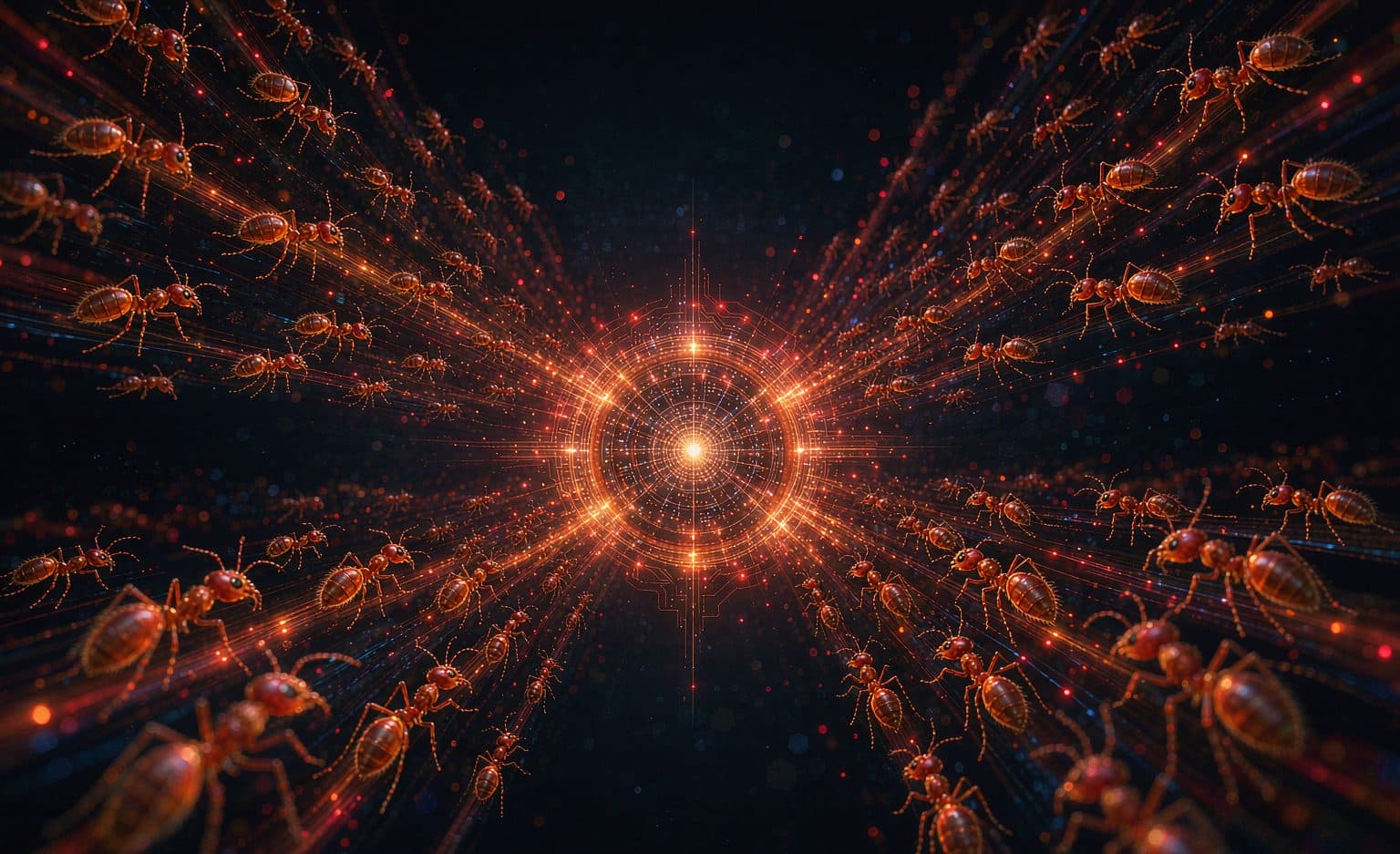
A single ant is almost useless. It wanders, it forages, it dies. Put ten thousand of them together and you get a colony that routes traffic, regulates temperature, and rebuilds itself after damage — with no manager and no blueprint.
This is not a metaphor we reach for to be poetic. It is the exact engineering problem every decentralized network solves, whether it knows it or not.
Emergence is a protocol, not a miracle
Ants coordinate through simple local rules: follow the strongest pheromone trail, drop your own trail when you find food, avoid overcrowding. Nobody computes the global optimum. The optimum emerges from the noise.
Blockchain consensus does the same thing with different primitives. Validators do not agree because a leader tells them to. They agree because the protocol makes defection more expensive than cooperation, and because honest behavior is the locally rational choice. The global truth — the canonical chain — is an emergent property of thousands of selfish, independent decisions.
The lesson for builders: stop trying to design the center. Design the local rule, and let the swarm compute the rest.
Why this matters for RWA
Real World Assets are messy. Ownership is fragmented across jurisdictions, custodians, and legacy ledgers. No single coordinator can see the whole picture, and a single coordinator is a single point of failure.
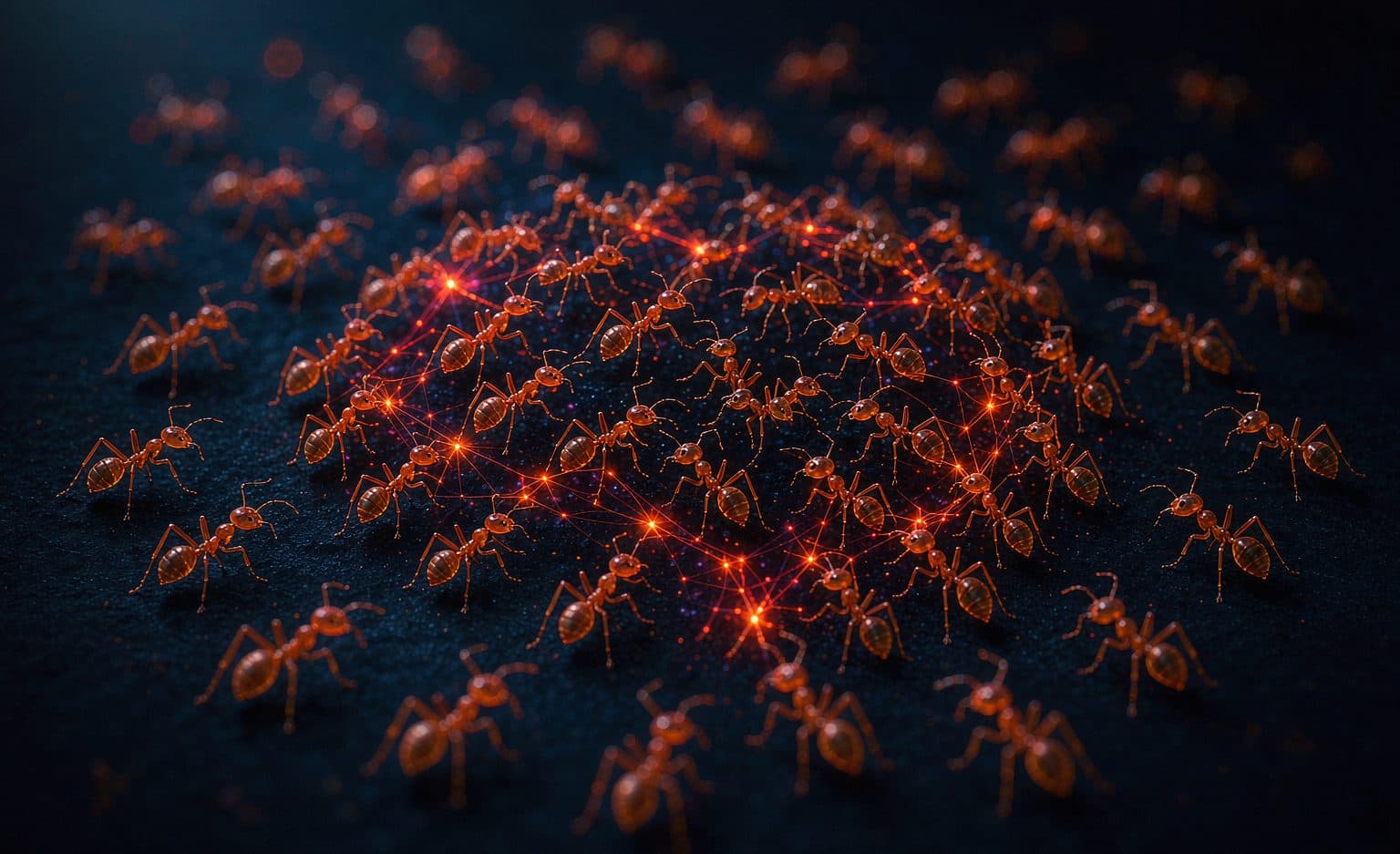
Swarm-style coordination flips this. Tokenization turns each claim into a small, legible, composable unit. Thousands of participants — issuers, validators, oracles, liquidity providers, auditors — each optimize locally. The result is a settlement and ownership graph that is more resilient than any central registry, because no part of it can be bribed or broken in isolation.
The convergence premium
Speed is what everyone talks about. Convergence is what actually compounds. A network where many small, independent actors reliably reach the same answer is a network that can be trusted with real assets.
The platforms that win RWA will not be the fastest. They will be the ones whose local rules are sound enough that the swarm keeps converging — even when individual participants are lazy, greedy, or temporarily offline.
The bottom line
Ants do not need a CEO. Decentralized finance does not need a clearinghouse — provided the protocol is designed like nature: simple rules, local incentives, global emergence. Build for the swarm, and the swarm builds the asset.
Related analysis
 Infrastructure
Swarm Oracles: Why Decentralized Data Converges on Truth
 Analysis
 Tokenization